No, pulling out is not the next best thing.
“If the right of privacy means anything, it is the right of the individual, married or single, to be free from unwarranted governmental intrusion into matters so fundamentally affecting a person as the decision whether to bear or beget a child.”
— Justice William J. Brennan Jr.
Don’t you know the risks?
Just don’t have sex.
Simple, right?
Unfortunately not. According to a recent press release by the Centers for Disease Control, STD transmission is on the rise, with Gonorrhea, Syphilis, and Chlamydia being the most commonly reported. In addition, teen pregnancy rates in the US (although on the decline) are among the highest for industrialized nations (CDC 2019).
Out of only twenty-four that mandate any sex education in their public schools, twenty-one have laws detailing abstinence-only sex ed programs. Is it really so bizarre to think that telling teenagers to just not have sex will keep them from doing it?
The fact of the matter is, the $2 billion in funding that the Congress has allocated in the last four decades towards “Abstinence-only Until Marriage” programs is grossly ineffective at preventing teen pregnancy (Planned Parenthood).
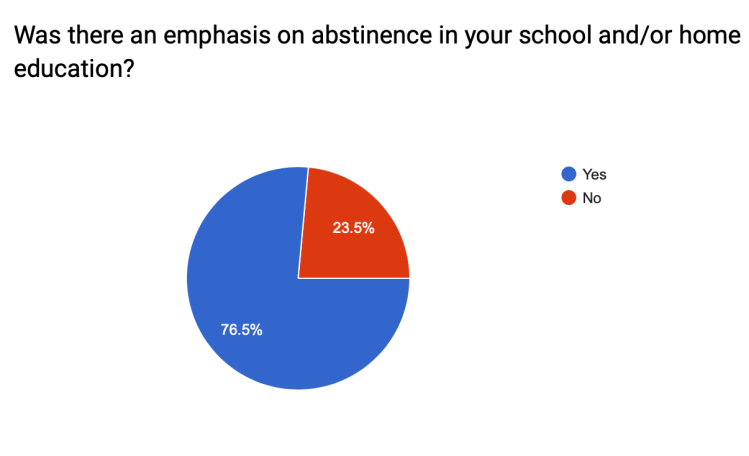
It should come as no surprise that keeping quiet about sex or drilling abstinence into school curriculums does very little to keep teenagers from having sex. Although there is a fine line between enabling teenagers to do whatever they want and giving them tools to be safe making their own decisions.
47% of women reported that the internet was their most prominent source of sex education, and an equivalent 47% considered the totality of their sex education to be inadequate (Brown 2019).
There is something inherently problematic about failing to address questions about contraception and safe sex in public schools. Especially when versions of that information are available in google searches at teenagers’ fingertips.
In addition, social conditions that create an environment in which abstinence is emphasized as the only viable option are not conducive to allowing teens to access contraception that enables them to practice safe sex. Family dynamics, social pressure, and miseducation all contribute to preventing young women from accessing contraception.
Other than the more tangible legal barriers to accessing different contraceptive methods despite constant backlash from various waves of the feminist movement, there are social barriers that contribute to teenagers’ inability to protect themselves from unwanted pregnancy or STDs.
I recently asked twenty young women ages 18-23 a series of questions regarding their perceived barriers to accessing birth control.
The results were less than shocking.
50% of the women who responded marked “family” as their greatest perceived barrier to accessing birth control methods and half of those women were already sexually active in high school. This means that in addition to the hoops that women of all ages have to jump through just to be prescribed hormonal birth control, there is a slew of psycho-social barriers that often discourage young women from seeking even more readily available versions such as condoms.
Shaming young women out of communicating their own sexual safety does nothing to prevent them having healthy sexual relationships, let alone stopping them from having sex at all.
Having open conversations about safe sex and healthy relationships are imperative to keep the next generation of children healthy and safe when it comes to more mature relationships. Both families and schools have a role to play in protecting the safety of our young women.
This starts with better sex education, both in school systems and in more private settings.
Allowing conversations that address the many nooks and crannies that come with entering the dating world are one way birth control can be destigmatized for young women who could greatly benefit from using it. In addition, it can help to address intimate partner violence in budding young relationships.
According to researcher Julie N. Bergmann, IPV directly impacts a woman’s ability to use contraception. Women are often coerced or discouraged from insisting on using contraception even when it is in the best interest of their own safety to do so.
Sex education that lacks the comprehension to incorporate relationship and non-heteronormative power dynamics is less effective than its coercion-aware incorporative counterparts (Singh). Incorporating empowering education around partner dynamics and how to maintain healthy intimate relationships all work towards creating a safer environment for young women coming of age.
As legal barriers surrounding reproducitve rights have come crashing down throughout the last several decades, it seems only natural that the next step is to address socially nuanced barriers to young women receiving the contraception they need to keep themselves safe and healthy. Attempting to keep teenagers in the dark about sexuality until they are older or deemed mature enought to handle such information only keeps them at risk for STDs, IPV, and unplanned pregnancy.
In the age of the internet, it is the responsibility of lawmakers, teachers, and families, to start a new conversation around what it means to enter the world of dating and intimate relationships.
Sources
- Bergmann, Julie N. and Stockman, Jamila K. (2015). “How Does Intimate Partner Violence Affect Condom and Oral Contraceptive Use in the United States? A Systematic Review of the Literature,” Contraction, 91, 438-55.
- Maanvi Singh. (2015). NPR: Sex Ed Works Better When it Addresses Power in Relationships
- https://www.plannedparenthoodaction.org/issues/sex-education/abstinence-only-programs
- https://www.cdc.gov/nchhstp/newsroom/2019/2018-STD-surveillance-report-press-release.html
- https://www.cdc.gov/teenpregnancy/about/index.htm
 College and Contraception